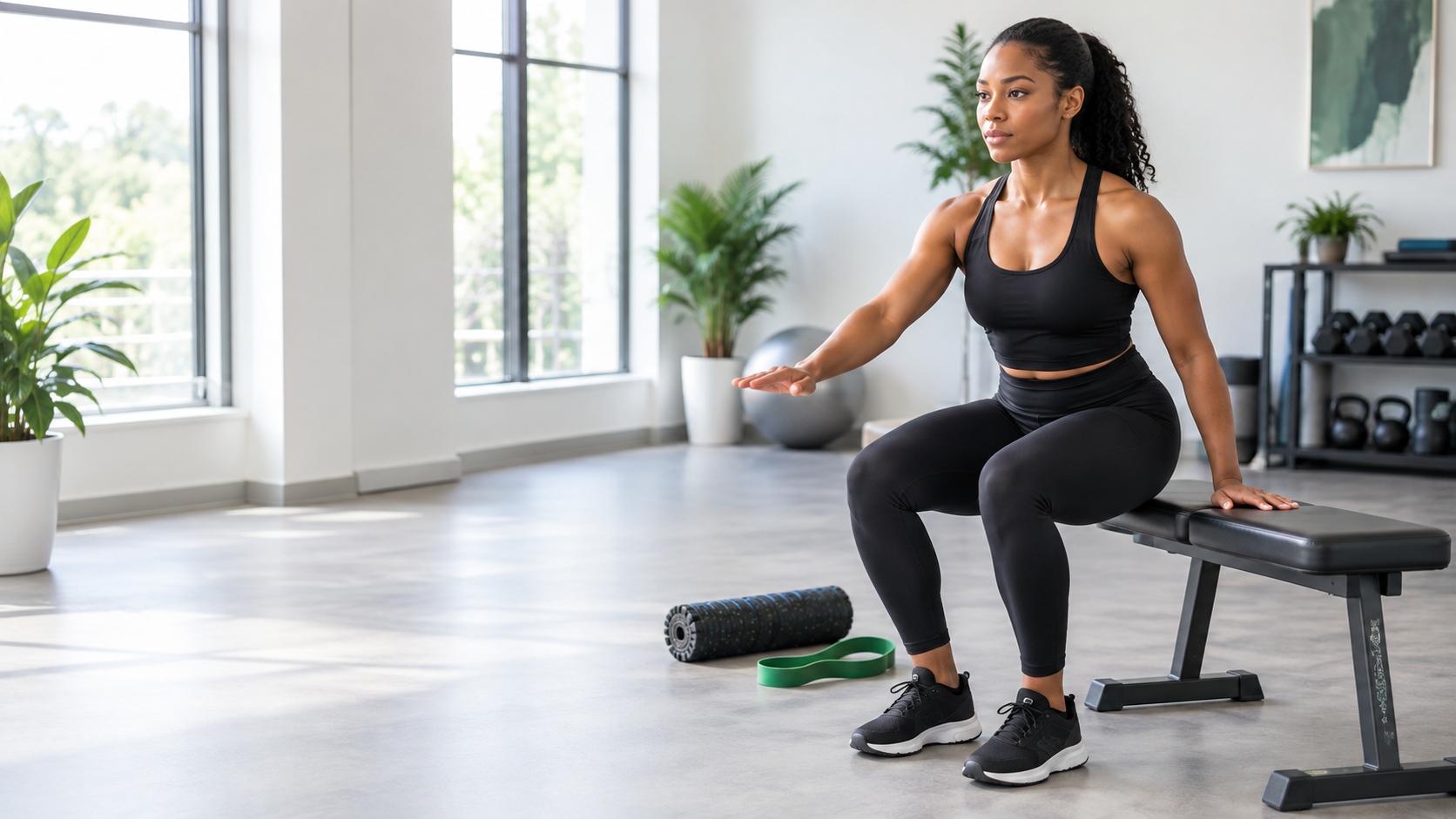
Finding the right exercises for common injuries and joint pain isn’t as simple as picking a workout off a list. The same movement that helps one person’s knee can flare up someone else’s. A lot depends on which joint is involved, how the injury happened, and how long it’s been going on. This article walks through the types of exercise that tend to help, the kinds of movement that usually need caution, and how a few specific injuries change the picture.
None of this replaces an actual diagnosis. Think of it as a starting point for understanding your options, not a personalized plan.
Can Exercise Help with an Injury or Joint Pain?
Often, yes — but not automatically, and not in every case.
Complete rest sounds like the safe choice when something hurts, but joints and muscles that don’t move for weeks tend to get stiffer and weaker, which can make pain worse over time rather than better. On the other hand, pushing through sharp or worsening pain isn’t a sign of toughness. It’s usually a sign that the movement needs to change.
The useful middle ground is controlled movement: enough to keep the joint mobile and the surrounding muscles working, without aggravating the injury itself. What that looks like depends entirely on the specific problem. A sprained ankle and a torn rotator cuff have almost nothing in common, even though both fall under “joint pain.”
Exercises for Common Injuries and Joint Pain: What to Do
Low-impact exercise
Walking, swimming, water aerobics, and stationary cycling put less stress on joints than running or jumping, which is why they’re often recommended first for people dealing with hip, knee, or ankle pain. Swimming in particular takes weight off the joints almost entirely, which is useful in the early stages of recovery when standing or walking is still uncomfortable.
Cycling with the seat set correctly can also work well for knee pain, since it moves the joint through a controlled range without impact. If pedaling causes sharp pain at the front of the knee, that’s usually a sign the resistance or seat height needs adjusting rather than a reason to stop cycling altogether.
Gentle mobility work
Mobility exercises are slow, controlled movements that take a joint through its available range — think ankle circles, shoulder rolls, or gentle knee bends. These aren’t meant to build strength. They’re meant to remind stiff joints how to move and to keep them from getting tighter while healing happens.
This is often where people can start even a day or two after a minor injury, well before strengthening work makes sense.
Stretching
Stretching helps some injuries and irritates others, so it’s worth being specific here.
Gentle stretching can ease stiffness in muscles that have tightened up around an injury, especially once the acute pain has settled. But stretching a joint that’s already inflamed, unstable, or recently torn can pull on tissue that needs to stay still while it heals. If a stretch produces sharp pain, pinching, or a feeling of the joint giving way, that’s a signal to stop, not push further.
Strengthening exercises
Once the initial pain has calmed down, strengthening exercises for injured joints become important. Weak muscles around a joint mean the joint itself absorbs more force, which is part of why injuries so often turn into recurring problems. Building strength gradually — usually starting with bodyweight or light resistance — gives the joint more support.
The word “gradually” matters here. Jumping straight into heavy resistance training after weeks of inactivity is one of the more common ways people re-injure themselves.
Balance and stability exercises
Balance work doesn’t get as much attention as stretching or strengthening, but it matters a lot for injuries involving the ankle, knee, or hip. Standing on one leg, using a wobble board, or practicing controlled single-leg movements retrains the small stabilizing muscles that often weaken after an injury. This matters even more for older adults, since poor balance is one of the biggest risk factors for falls and repeat injuries.
Exercises to Avoid When You Have an Injury or Joint Pain
Some categories of movement need more caution than others, though which ones apply to you depends on the injury.
- High-impact exercise (running, jumping, high-intensity interval training) puts repeated force through the joints and can aggravate injuries that haven’t fully healed.
- Heavy loading too soon — lifting weights that are too heavy before the surrounding muscles have rebuilt strength—often does more harm than good.
- Deep or end-range joint positions, like a full squat with a bad knee or overhead reaching with a shoulder injury, can stress exactly the part of the joint that’s already compromised.
- Sudden twisting or pivoting movements are a common cause of re-injury, especially in the knee and lower back.
- Explosive movements, such as jumping or sprinting, ask a lot from joints and tendons that may not be ready for that kind of load.
- Exercising through sharp, worsening pain rarely speeds up recovery. It usually delays recovery.
- Returning to a previous training intensity too quickly, before checking how the body responds to smaller amounts of activity, is one of the most common mistakes people make after time off.
None of these are universal rules. A runner recovering from a mild ankle sprain might be back to light jogging within a couple of weeks, while someone with a knee ligament injury might need months before impact exercise is appropriate again. That’s why generic advice only goes so far.
Common Injuries and Joint Problems That Need Different Exercise Approaches
Hip pain and hip impingement
Hip pain can come from arthritis, muscle strain, or structural issues like hip impingement, where the bones of the hip joint don’t move together smoothly. Certain positions — deep squats, crossing the legs, or sitting for long periods — can aggravate impingement symptoms in some people. Hip impingement exercises typically focus on improving how the joint moves rather than simply stretching it, which is a distinction worth understanding before starting any hip routine.
Lower back pain and the L5-S1 level
Lower back pain isn’t one condition. Someone with a disc issue at the L5-S1 level, the joint between the last lumbar vertebra and the sacrum, often needs a different approach than someone with general muscle tightness. Movements that increase symptoms—often deep forward bending or heavy lifting with a rounded back — may need to be avoided or modified. This is part of why L5-S1 exercises to avoid are such a commonly searched topic; the exercises that help one type of back pain can worsen another.
Shoulder injuries and labral tears
The shoulder has an unusual amount of mobility, which also makes it prone to instability. A labral tear—damage to the ring of cartilage that helps hold the shoulder joint in place—needs a rehab approach guided by the tear’s location, the treatment plan, and how far along recovery is. PT exercises for a torn labrum vary widely from case to case, which is why generic shoulder workouts aren’t a safe substitute for guided rehab.
If your shoulder pain involves stiffness that makes it hard to move the joint at all, it’s also worth reading about exercises for capsulitis, since frozen shoulder responds to a different kind of exercise progression than a labral injury does.
Pelvic floor problems
Pelvic floor exercises are often recommended for issues like a prolapsed bladder, but this isn’t a one-size-fits-all area. Pelvic exercises for a prolapsed bladder need to match the type and severity of the prolapse, and doing them incorrectly can sometimes make symptoms worse rather than better. The same caution applies to tools like Kegel pelvic exercise weights — they can be useful for some people and unhelpful or even counterproductive for others, depending on the underlying issue. A pelvic floor assessment is genuinely useful here, more so than in most other areas covered in this article.
Psoas tightness
The psoas is a deep hip flexor muscle that gets blamed for a wide range of symptoms, from lower back pain to hip stiffness. Psoas exercises, whether stretching or strengthening, can help some people with genuine tightness in that muscle. But a tight-feeling psoas isn’t automatically the cause of someone’s pain, and treating it as the default explanation can mean missing what’s actually going on.
Nerve-related symptoms
Numbness, tingling, or weakness point to a nerve issue rather than ordinary muscle soreness, and that distinction changes how exercise should be approached. Ulnar nerve entrapment, for example, affects the nerve that runs along the inside of the elbow and can cause tingling in the ring and little fingers. Ulnar nerve entrapment exercises focus on reducing pressure on the nerve, which is a different goal than the stretching or strengthening used for a typical muscle strain. Nerve symptoms in general deserve more caution than muscle soreness, since pushing through them can make things worse.
Foot and lower-leg problems
Shin splints and drop foot are both lower-leg issues, but they’re not related. Shin splints usually come from repetitive impact and often respond to specific stretches for the muscles along the shin, along with a temporary reduction in running volume. Drop foot, on the other hand, involves difficulty lifting the front of the foot and is usually linked to a nerve or muscle problem rather than overuse. PT exercises for drop foot look completely different from stretch exercises for shin splints, which is worth knowing before assuming one condition is just a variation of the other.
Thumb and hand problems
Trigger thumb, where the thumb catches or locks when bending, is a common but often misunderstood hand issue. Trigger thumb exercises focusing on gentle range of motion can help mild cases, but persistent locking, significant pain, or a thumb that gets stuck in a bent position is a reason to see a doctor rather than continuing to stretch it at home.
Neck and posture-related concerns
A rounded upper back or a visible bump at the base of the neck sometimes gets labeled a “neck hump” and blamed entirely on posture. Neck hump exercises and simple movements like the chin tuck exercise can help some people improve posture and reduce related neck strain. But a visible change in that area doesn’t always come from posture alone, so it’s worth getting it checked rather than assuming exercise will resolve it on its own.
Trauma release exercises
Trauma release exercises, sometimes called TRE, involve movements meant to trigger a natural shaking or tremoring response in the body. Some people find this helps with tension. It’s not a substitute for mental health treatment, and claims about what it can treat go well beyond what the evidence currently supports.
When Should You Stop Exercising and See a Professional?
A few warning signs mean it’s time to stop and get checked rather than push through:
- Severe or worsening pain, especially if it’s getting worse over days rather than settling down
- Significant swelling, particularly if it comes on suddenly
- Noticeable weakness, or a joint that feels like it might give way
- Numbness or tingling that doesn’t go away
- A sudden injury with a pop, tearing sensation, or immediate inability to move the joint normally
- Inability to bear weight on the affected leg or foot
- Symptoms that keep getting worse despite rest and modified activity
None of these mean something is necessarily serious. They just mean a professional — a doctor or physical therapist — is better placed to figure out what’s going on than a general article can be.
Frequently Asked Questions
What exercises are good for joint pain?
Low-impact options like walking, swimming, and cycling, along with gentle mobility and gradual strengthening work, tend to be well tolerated. The right choice still depends on which joint is affected and what’s causing the pain.
Should you exercise when an injury still hurts?
Some movement is usually better than complete rest, but sharp or worsening pain is a sign to modify or stop, not push through.
What exercises should you avoid with an injury?
High-impact activity, heavy loading, deep or painful joint positions, and sudden twisting movements are the categories that most often cause setbacks, though the specifics depend on the injury.
Is walking good for joint pain?
For many people, yes. Walking is low-impact and easy to adjust in intensity, which makes it one of the more accessible exercises for common injuries and joint pain. It’s not automatically appropriate for every condition, though — some foot and lower-leg injuries need a break from walking altogether.
Is stretching good for injured joints?
Sometimes. Gentle stretching can help once acute pain has settled, but stretching a joint that’s inflamed or unstable can do more harm than good.
Can exercise make an injury worse?
Yes, particularly if the movement loads the injured area too much, too soon, or in a position it can’t yet tolerate. This is why exercises to avoid after an injury are just as important to understand as the ones that help.
When should you stop exercising because of pain?
Stop if pain is sharp, sudden, or getting worse, or if you notice swelling, numbness, or weakness. Mild soreness that fades within a day is different from pain that escalates.
When should you see a physical therapist for joint pain?
If pain persists beyond a couple of weeks, keeps coming back, or limits daily activities, a physical therapist can identify the cause and build an exercise plan suited to your specific injury rather than a general one.
Conclusion
There isn’t a single set of exercises that works for every injury or every joint. What helps a stiff shoulder can aggravate an unstable one. What eases mild back tightness can be the wrong move entirely for a disc problem at L5-S1. The details of your specific injury — what caused it, how long it’s been going on, and how it responds to movement — matter more than any general list of exercises to try or avoid. If something isn’t improving, or the pain is getting worse instead of better, that’s worth a conversation with a doctor or physical therapist rather than more time spent guessing.