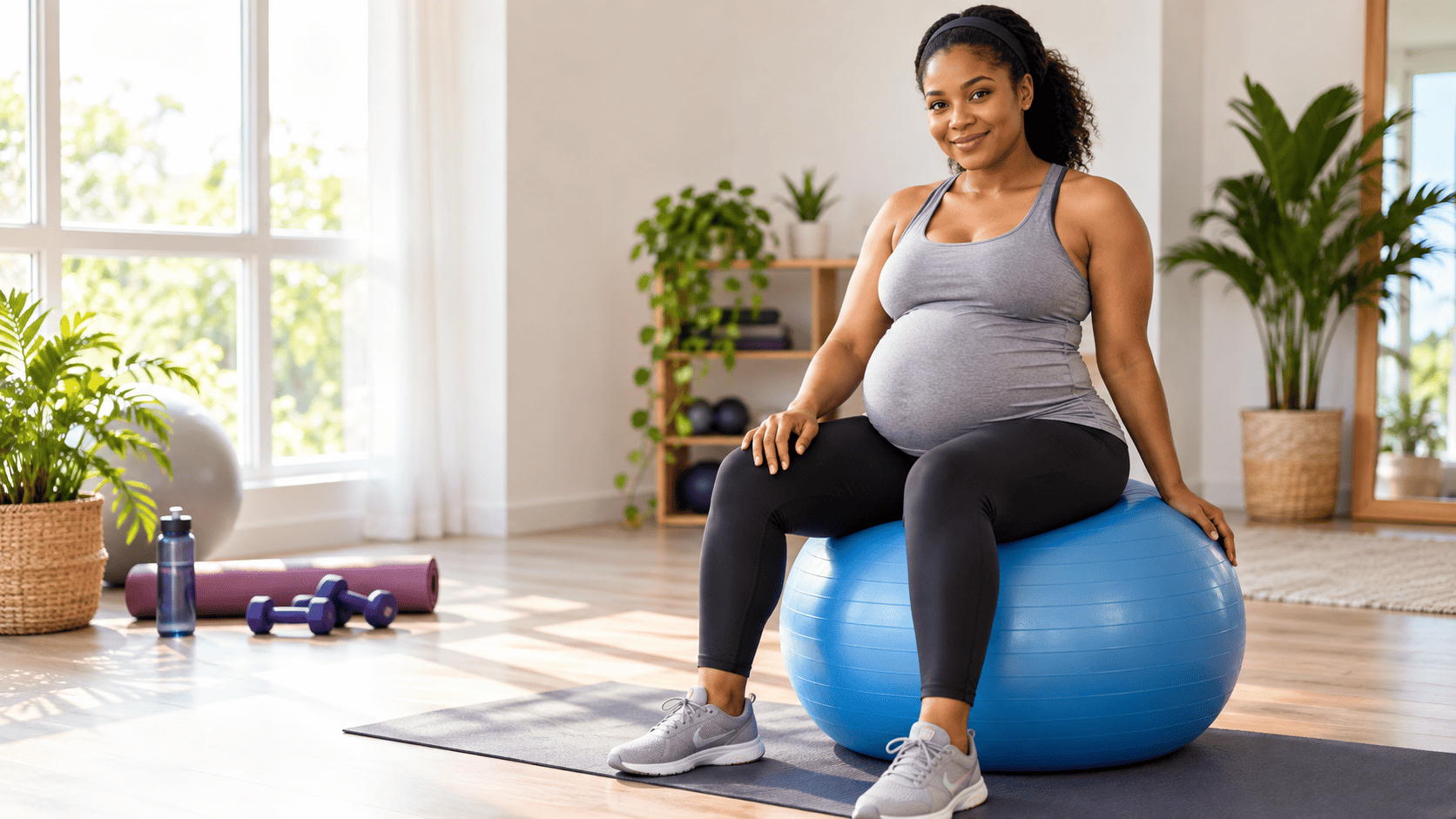
Pregnancy changes your body every single week, and finding a workout that keeps up with those changes isn’t always easy. That’s where the humble exercise ball (also called a birth ball, stability ball, or Swiss ball) comes in. It’s cheap, low-impact, and surprisingly effective for building strength, easing aches, and even preparing your body for labor.
If you’ve been searching for ball exercise for pregnant women that are actually safe and easy to follow, this guide walks you through everything: the benefits, the best exercises for each trimester, safety tips, and how to pick the right ball for your body.
What Is a Pregnancy Exercise Ball?
A pregnancy exercise ball is a large, inflatable rubber ball used for stretching, strengthening, and balance work. Physiotherapists have used them for decades in rehab settings, and over the past 20 years they’ve become a staple in prenatal fitness and childbirth preparation classes.
Unlike a bench or a mat, the ball is unstable by design. That instability forces your core and pelvic floor to activate constantly just to keep you balanced, which makes even simple movements more effective. It also lets you move your hips and pelvis in ways that are hard to do on a flat surface, which is one reason midwives often recommend bouncing or rocking on a ball during early labor.
Why Doctors and Midwives Recommend It
Leading health bodies, including the American College of Obstetricians and Gynecologists (ACOG), note that physical activity in pregnancy carries minimal risk for most women, though routines often need small adjustments as the body changes. In other words, staying active is encouraged; you just need to adapt how you move, and a stability ball is one of the gentlest tools for doing that.
Benefits of Ball Exercise for Pregnant Women
Before jumping into the exercises, it helps to understand why this specific tool is worth adding to your routine.
- Eases lower back and pelvic pain. Gentle rocking and figure-eight hip movements on the ball can loosen tight muscles around the lower spine and pelvis.
- Strengthens the core safely. Traditional crunches aren’t recommended during pregnancy, but ball-based core work strengthens deep stabilizing muscles without straining the abdomen.
- Improves posture. As your belly grows, your center of gravity shifts. Ball exercises train the muscles that keep you upright and balanced.
- Supports pelvic floor health. Many ball movements naturally engage the pelvic floor, which can help with bladder control and postpartum recovery.
- Prepares the body for labor. Bouncing, rocking, and hip circles on a birth ball are widely used in labor rooms to help encourage optimal fetal positioning and ease contractions.
- Boosts circulation and reduces swelling. Gentle movement keeps blood flowing to the legs and feet, which can help with the puffiness many women experience in later pregnancy.
- Low impact on joints. Pregnancy hormones loosen your joints and ligaments, so low-impact movement matters. A ball workout puts far less stress on the knees and ankles than running or jumping.
Choosing the Right Size Ball
Getting the correct ball size matters more than most people expect. Sit on the ball with your feet flat on the floor. Your knees should form roughly a 90-degree angle, with your hips level with or very slightly higher than your knees.
| Your Height | Recommended Ball Size |
|---|---|
| Under 5’0″ (152 cm) | 45 cm |
| 5’0″ – 5’5″ (152–165 cm) | 55 cm |
| 5’6″ – 6’0″ (168–183 cm) | 65 cm |
| Over 6’0″ (183 cm) | 75 cm |
Always choose an “anti-burst” ball, which deflates slowly instead of popping if punctured. This is a small detail that makes a real safety difference once your bump adds extra weight to every movement.
Is It Safe to Exercise on a Ball While Pregnant?
For most women with an uncomplicated pregnancy, yes. ACOG’s guidance describes exercise as both safe and desirable during pregnancy when there are no medical complications ruling it out. Ball exercises are generally considered one of the gentler forms of prenatal movement because they’re low-impact and adjustable to any fitness level.
That said, always get personal clearance from your doctor or midwife before starting any new exercise routine, especially if you have a high-risk pregnancy, placenta previa, preeclampsia, or a history of preterm labor.
General Safety Guidelines
- Warm up for 5 minutes with easy walking or gentle stretching before starting.
- Keep a chair, wall, or partner nearby for balance support, especially after the first trimester.
- Avoid lying flat on your back for extended periods after the first trimester, as this can compress a major blood vessel and reduce blood flow.
- Use the “talk test”: you should be able to hold a conversation while exercising. If you’re too breathless to talk, slow down.
- Stop immediately if you feel dizziness, chest pain, vaginal bleeding, sudden swelling, painful contractions, or fluid leakage, and contact your healthcare provider.
- Stay hydrated and avoid overheating, particularly in warm rooms or climates.
- Wear supportive, non-slip footwear or exercise barefoot on a non-slip surface.
Best Ball Exercises for Pregnant Women (By Trimester)
Here’s a practical breakdown of exercises you can safely try, organized by stage of pregnancy. Start with 8–10 repetitions of each move, or hold static positions for 20–30 seconds, and build up gradually as your strength improves.
First Trimester Ball Exercises
Energy levels can swing wildly in the first trimester, so keep sessions short and gentle.
- Seated Bounce: Sit on the ball with feet flat, hip-width apart. Gently bounce up and down for 1–2 minutes. This warms up the hips and pelvic floor.
- Pelvic Tilts: Sit tall on the ball, hands on hips. Slowly tilt your pelvis forward and backward in a smooth, controlled motion. This helps build core awareness early on.
- Seated Marching: While seated on the ball, lift one knee at a time as if marching in place. Great for gentle core activation without strain.
Second Trimester Ball Exercises
As your bump grows, balance work and hip mobility become more valuable.
- Hip Circles: Sit on the ball and slowly rotate your hips in a wide circle, like drawing a clock face with your pelvis. Do 5–10 circles each direction. This is a favorite for relieving lower back tension.
- Wall Squats with Ball: Place the ball between your lower back and a wall. Slowly bend your knees to lower into a squat, then push back up. This strengthens the thighs and glutes while the ball protects your spine.
- Seated Side Bends: Sit on the ball, arms relaxed by your sides. Gently lean to one side, sliding your hand down your leg, then return to center and repeat on the other side.
- Kneeling Chest Stretch: Kneel on the floor and rest your forearms on top of the ball. Gently roll it forward to stretch your chest and shoulders, which often round forward as the breasts change during pregnancy.
Third Trimester Ball Exercises
In the final stretch, the focus shifts toward comfort, pelvic opening, and labor preparation.
Figure-Eight Rocking
Sit on the ball and trace a figure-eight pattern with your hips. This move is widely used in late pregnancy to help encourage the baby into a favorable position for birth.
Supported Squat
Hold onto a stable chair or partner’s hands, then lower into a slow squat with the ball positioned behind your back against a wall for support. This can help open the pelvis in preparation for labor.
Gentle Bouncing with Breathing
Combine slow, deep breathing with light bouncing on the ball. This is one of the most commonly used positions during early labor to manage discomfort.
Forward Lean Over the Ball
Kneel on the floor with the ball in front of you, and rest your chest and arms over it. This position takes pressure off the lower back and is a favorite for relieving late-pregnancy backache.
Sample Weekly Ball Workout Routine
If you’re not sure how to structure your sessions, here’s a simple template you can adapt to your energy levels and trimester.
| Day | Focus | Duration |
|---|---|---|
| Monday | Pelvic tilts + hip circles | 15 minutes |
| Wednesday | Wall squats + side bends | 15 minutes |
| Friday | Figure-eight rocking and breathing bounce | 15 minutes |
| Weekend | Rest or light walking | — |
Three sessions a week, alongside daily walking, comfortably fits within the activity levels recommended for most pregnant women. ACOG suggests aiming for at least 150 minutes of moderate-intensity aerobic activity per week, split into shorter sessions throughout the week rather than one long workout.
Common Mistakes to Avoid
- Skipping the warm-up. Cold muscles and loosened joints are a poor combination; always ease into movement.
- Overinflating the ball. A slightly softer ball offers more stability for pregnancy exercises than a fully firm one.
- Holding your breath. Breathe steadily through every movement, especially during squats and stretches.
- Pushing through pain. Mild muscle fatigue is normal; sharp or shooting pain is not. Stop and reassess.
- Exercising alone in later pregnancy. Once your balance is affected in the third trimester, it’s safer to have someone nearby during ball workouts.
Using the Ball for Everyday Comfort, Not Just Workouts
One thing many women don’t realize is that a pregnancy ball doesn’t have to be reserved for structured exercise sessions. It can double as a comfort tool throughout the day. Sitting on the ball instead of a regular chair while watching TV or working at a desk keeps your hips gently mobile and can reduce the stiffness that builds up from long periods of sitting. Some women find that a few minutes of slow bouncing after meals helps with digestion, since pregnancy hormones can slow the digestive system down.
Later in pregnancy, resting your upper body over the ball while kneeling can relieve pressure on the lower back after a long day on your feet. This is essentially the same position used in birthing suites, and getting familiar with it beforehand means it will feel natural if you choose to use it during labor.
How Ball Exercise Compares to Other Prenatal Workouts
It’s worth understanding where ball exercise fits alongside other popular prenatal activities, since combining a few types of movement often works better than relying on just one.
- Walking is excellent for cardiovascular health and requires no equipment, but it doesn’t target the pelvic floor or hip mobility the way ball work does.
- Prenatal yoga overlaps with ball exercise in terms of flexibility and breathing, but a ball adds an element of instability that actively trains balance and core control.
- Swimming is gentle on the joints and great for overall fitness, though it isn’t accessible to everyone and doesn’t replicate the upright, gravity-assisted positions a ball encourages.
- Stationary cycling builds leg strength and cardiovascular fitness but again offers little for the pelvic floor or labor-specific positioning.
Rather than choosing just one method, many prenatal fitness instructors recommend blending two or three of these activities across the week, with the ball serving as the go-to option for shorter, low-effort sessions on busy days.
When to Modify or Pause Ball Exercises
Not every pregnancy follows the same path, and there are situations where ball exercises should be modified or paused entirely, even if you feel otherwise well. If you’re experiencing any of the following, check with your healthcare provider before continuing your routine:
- A diagnosed condition such as placenta previa, an incompetent cervix, or a history of preterm labor
- Twin or multiple pregnancy, which may come with additional activity restrictions depending on your provider’s guidance
- Persistent round ligament pain that worsens with movement
- Significant balance issues or a recent fall
- Reduced fetal movement, which always warrants a call to your provider regardless of exercise plans
If you’re cleared to continue but notice new discomfort with a specific move, simply switch to a gentler variation, shorten the range of motion, or swap it out for one of the seated stretches described earlier. The goal is steady, comfortable movement, not pushing through resistance from your body.
Postpartum: Can You Keep Using the Ball?
Many of the same exercises that support you during pregnancy remain useful after delivery, once your healthcare provider has cleared you for postpartum activity. Gentle seated bouncing and pelvic tilts can help ease you back into movement, support pelvic floor recovery, and even help soothe a fussy baby if you hold them while sitting on the ball. Because the movements are low-impact, the ball is often one of the first tools postpartum fitness programs reintroduce, typically starting a few weeks after a vaginal delivery or a bit longer after a cesarean birth, depending on individual recovery.
Frequently Asked Questions
Can I do ball exercises every trimester of pregnancy? Yes, with modifications. Early pregnancy allows for slightly more dynamic movement, while later trimesters shift toward gentler, more supported positions focused on comfort and labor preparation.
How long should I exercise on the ball each day? Ten to twenty minutes is plenty for most women. Consistency across the week matters more than the length of any single session.
Can a birth ball help start labor? Bouncing and rocking on a ball won’t induce labor on their own, but many women find these movements helpful for encouraging the baby into a good position and easing discomfort once labor has begun naturally.
What if I’ve never exercised before pregnancy? That’s completely fine. Ball exercises are gentle enough to be a great starting point. Begin slowly, choose the simplest moves, and build up gradually.
Conclusion
Ball exercise for pregnant women is one of the most accessible, low-cost ways to stay active, ease common pregnancy discomforts, and feel more prepared for labor. The key is choosing the right ball size, listening to your body, and adjusting your routine as each trimester brings new changes. As always, check in with your doctor or midwife before starting, and let comfort, not intensity, guide every session.
Checkout: How to exercise the body, mind, and health, also The Complete Guide to Back Exercises With Dumbbells