Hip impingement exercises are gentle mobility moves plus glute and core strengthening, usually tailored by a physical therapist, and paired with avoiding deep hip bending and twisting that pinches the joint. They can ease pain and help the hip move better. What they can’t do is change the shape of the bone behind the problem.
That distinction matters, because most advice online treats exercise as a cure. This guide covers what hip impingement is, what the best research says about exercise, which hip impingement exercises are worth trying, which movements tend to cause trouble, and when it’s time to stop experimenting and get checked.
What Is Hip Impingement?
Hip impingement, also called femoroacetabular impingement or FAI, is painful pinching or rubbing inside the hip joint. The hip is a ball-and-socket joint, and in FAI, the two parts don’t fit together smoothly.
Cam, Pincer, and Combined
The American Academy of Orthopaedic Surgeons describes three types. A cam impingement means a bump on the ball of the joint. A pincer impingement means extra bone on the rim of the socket. Combined impingement means both are present. The AAOS says FAI happens because the hip bones don’t form normally during the growing years. Boston Medical Center’s patient guide, which repeats that text, adds that exercise doesn’t cause FAI, though active people may notice pain sooner.
What It Feels Like
Pain is the main symptom, most often in the groin but sometimes on the outside of the hip. Stiffness and limping are common. The AAOS notes that turning, twisting, and squatting can cause sharp pain, while other times it’s a dull ache. Cleveland Clinic adds that sitting still for a long time or lying on your side can make it worse. Some people also get clicking or locking in the joint.
One more detail surprises people. A blog from the British Journal of Sports Medicine notes that cam and pincer shapes show up on imaging in many people with no symptoms at all. So an image alone isn’t the diagnosis. Symptoms and a proper exam count too.
Do Hip Impingement Exercises Work?
They can reduce pain and improve how the hip works for many people, but they don’t reshape the bone, and some people still end up needing surgery.
What the Best Trial Found
The strongest evidence comes from the UK FASHIoN trial, which randomly assigned 348 people with impingement to either hip arthroscopy or personalized hip therapy, a physiotherapist-led program of 6 to 10 sessions that builds strength around the hip. Everyone was 16 or older, had hip pain with a cam or pincer shape on imaging, and had no arthritis in the hip. Both groups improved. Surgery improved things a moderate amount more, but the researchers found it wasn’t cost-effective compared with therapy at one year. About one in four people in the therapy group, 24 percent, chose surgery within one to three years.
What Exercises Can and Can’t Do
NYU Langone explains that nonsurgical treatment doesn’t fix the structural cause, but sometimes it’s all that’s needed to relieve pain and avoid surgery. So exercise is a sensible first step for many people, not a guarantee.
What a Physical Therapist Does for Hip Impingement
A good visit is more than a handout of exercises. The personalized hip therapy protocol published in the British Journal of Sports Medicine has four parts, all led by physiotherapists: a detailed assessment, education and advice, help with pain relief, and an exercise program matched to the person.
NYU Langone adds that its rehabilitation specialists help people use simple stretching and strengthening and identify movements to avoid. That second job matters as much as the first. Two people with the same scan can need different restrictions, which is why copying a routine from a website is a gamble.
Glute and Hip Strength Hip Impingement Exercises
Strengthening the muscles around the hip is the core of most programs. The personalized hip therapy used in the UK trial combined assessment, advice, pain relief, and an exercise program built around the person.
Bridges
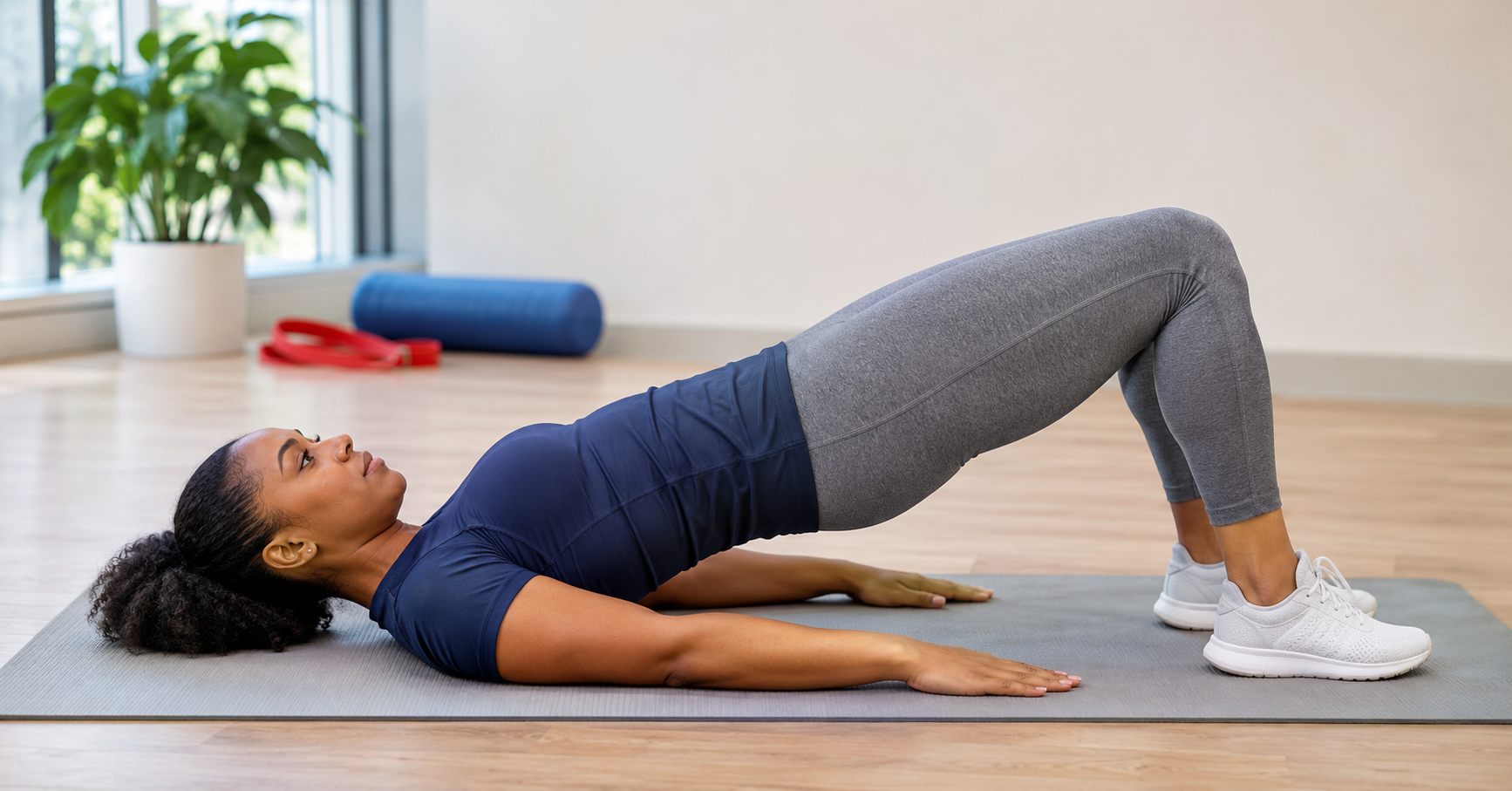
Lie on your back with your knees bent, tighten your buttocks, and lift your hips off the floor. Circle Health describes this as a way to build stability in the hips and buttocks. A clinic program from Pure Physiotherapy starts with short holds of up to five seconds.
Clamshells and Side-Lying Leg Lifts
Both target the muscles that move the leg out to the side. A table of hip rehab exercises on PubMed Central lists side-lying hip abduction, such as leg raises or clamshells, and bridging as standard strength and control work. The Fowler Kennedy Sport Medicine Clinic’s conservative FAI guidance lists clamshells, isometric side-lying hip abduction, and bridging too. The same PubMed Central table includes side stepping against a resistance band, which therapists tend to add later.
Keeping Hip Impingement Exercises Comfortable
Stay in a range that doesn’t pinch. A sharp, deep pain at the front of the hip means the movement is going too far, so shrink it. Mild muscle effort in the buttocks is what you’re after.
Core and Pelvic Control Hip Impingement Exercises
Hip impingement exercises also train the trunk. NYU Langone says core strength gives the hips extra support and takes some stress off them when you walk and exercise.
Knee Drops
A hip pain guide from an NHS trust describes starting with the core stability muscles, then gradually dropping one knee out to the side while keeping the pelvis level and the other leg still. The point is control, not range.
Weight Shifts and Balance
The Fowler Kennedy guidance progresses from equal weight bearing to shifting weight side to side and onto one leg, with wobble boards for support. It also lists deep abdominal and pelvic floor settings as part of the lumbar pelvic work, and the clinic’s authors say good core stability is the most important goal.
Hip Impingement Exercises to Avoid or Modify
Movements that bend the hip deeply or twist it under load are the usual culprits. Which ones bother you depends on your joint shape, so treat this list as a starting point.
Deep Bending
The Hospital for Special Surgery advises avoiding repetitive hip flexion, which means bringing the leg up toward your chest. It suggests keeping squats shallow and holding off on lunges until you have a diagnosis. An orthopedic practice, Beacon Orthopaedics, lists deep squats such as sumo squats, lunges, leg press, deadlifts, high knees, and high box jumps as ones to avoid.
Twisting and Impact
NYU Langone points to turning, twisting, and squatting, and to sports with repeated hip rotation, such as golf, baseball, and ballet. Beacon also lists plyometrics and rowing machines. Cycling can work if the bike is sized properly, according to the same practice.
A Caution About Blanket Rules
HSS warns that with some hip injuries, routine stretching and strengthening can make things worse, which is why a proper diagnosis comes first. If an exercise causes hip pain, stop it.
Everyday Habits That Change Hip Impingement Pain
Sitting causes more trouble than most people expect. HSS suggests opening the seat angle so your knees sit below your hips while keeping an upright posture. The Fowler-Kennedy guidance also names common habits, including sitting cross-legged and sleeping on your side.
While you adjust your chair, check your neck too. A desk posture that pushes the head forward and rounds the upper back is a separate problem, and neck hump exercises and the chin tuck exercise are the usual starting points. Don’t assume a bump at the base of the neck is only posture, though. Cleveland Clinic lists osteoporosis-related spinal fractures as another cause.
Should You Stretch With Hip Impingement?
Only when a stretch targets a real restriction, and not by default. Fowler Kennedy’s guidance says stretching is indicated only where there’s a loss of motion in a particular range.
The hip flexor stretch gets recommended a lot, since Harvard Health says sitting tightens the hip flexors. But a deep stretch isn’t a safe guess for impingement, and Psoas exercises should come after an assessment, not before it. HSS’s advice to avoid repetitive hip flexion applies to stretching too. If a stretch makes the front of the hip pinch, back off.
When the Hip Labrum Is Involved
Like the shoulder, the hip has a ring of cartilage called the labrum. A review in the British Journal of Hospital Medicine says impingement can cause shearing stress on the socket, with labral tearing in some cases. A hospital patient guide adds that a pincer shape can crush the labrum.
That’s a different joint from the shoulder. PT exercises for a torn labrum cover the shoulder, and the two joints follow different rules. A hip labral tear needs a hip-specific plan from your clinician.
Pelvic Floor and Hip Impingement
The hips and pelvic floor work side by side. PainWeek, a pain medicine organization, says hip problems like FAI are often overlooked in people with pelvic pain and can refer pain to the pelvic region. It also reports that many people with chronic pelvic pain have tender pelvic floor muscles that don’t relax well.
If you have heaviness, a bulge, or leaking, those symptoms need their own assessment. Pelvic exercises for prolapsed bladder start from that assessment, not from a hip routine. Be careful with Kegel pelvic exercise weights too. Prevention Australia warns that unsupervised strengthening can aggravate an overactive pelvic floor, and a Cochrane review found weights no better than training without them.
Some people with deep hip tension also try trauma release exercises, often shortened to TRE. The research is mostly pilot studies and small trials, so it shouldn’t replace an assessment.
Back and Leg Symptoms That Point Elsewhere
Impingement pain can show up in the groin, the outer hip, and sometimes the lower back. That overlap makes it easy to blame the wrong thing.
If your back is the real problem, the rules change. A disc problem at the lowest level of the lumbar spine needs its own plan, and L5-S1 exercises to avoid are worth reading before you add deep stretches or loaded squats.
Foot weakness isn’t on the AAOS’s usual symptom list for impingement, which is pain, stiffness, and limping. Drop foot means you can’t lift the front of the foot, and it most often comes from the peroneal nerve. PT exercises for drop foot depend on the cause, so new weakness needs a proper check.
Active people also pick up overuse problems elsewhere. Shin splints cause pain along the inner shinbone from repeated stress. Stretching exercises for shin splints belong to that problem and won’t help a hip.
Locking, Numbness, and Stiffness in Other Joints
Some symptoms sound alike but belong somewhere else. A locking feeling in the hip is one thing. A thumb that catches and sticks in a bent position is another, and Trigger thumb exercises cover that hand problem.
Nerve symptoms follow their own rules. The AAOS describes numbness and tingling in the ring and little fingers as typical of ulnar nerve entrapment at the elbow, which has nothing to do with the hip. Ulnar nerve entrapment exercises belong there.
Stiffness works the same way. A shoulder that’s stiff in every direction points toward frozen shoulder, and Exercises for capsulitis take a different path from anything in this guide.
When Surgery Comes Up
The AAOS says surgery may be recommended if tests show joint damage and nonsurgical treatment doesn’t relieve the pain. An NHS partner clinic notes scans are usually only requested when symptoms stay severe enough to consider surgery after appropriate nonsurgical care.
The UK trial gives a sense of the trade-off. Within three years, 12 percent of surgery patients needed a repeat arthroscopy, and 7 percent of the therapy group had a hip replacement, compared with 2 percent of the surgery group. These are trial results, not predictions for any one person.
When to See a Doctor
Get checked if the pain doesn’t settle, if you’re limping, or if it stops you from doing things you need to do. The AAOS says that if symptoms persist, you need a doctor to find the exact cause, and that FAI damage can increase the longer painful symptoms go untreated.
Numbness, weakness, or pain after a fall should also be looked at. A British Journal of Sports Medicine resource warns against overlooking serious causes when hip or groin pain doesn’t fit the usual patterns.
Common Questions About Hip Impingement Exercises
What are the best hip impingement exercises?
Glute strengthening such as bridges and clamshells, plus core control work like knee drops, are the most common choices. A physical therapist can match them to your hip.
Can exercise fix hip impingement?
It can ease symptoms for many people, but it doesn’t change the bone shape. Some people still need surgery.
What exercises should you avoid with hip impingement?
Deep squats, lunges, repeated hip bending, and twisting under load are the usual ones. Stop anything that pinches.
More Questions About Hip Impingement Exercises
Is walking good for hip impingement?
Often, but it depends. Walking involves less deep hip bending than squats or lunges, so many people tolerate it, and Beacon Orthopaedics says cycling can work with a properly sized bike. If walking pinches, shorten it.
How long do hip impingement exercises take to work?
There’s no fixed timeline. The UK trial’s therapy program ran 6 to 10 supervised sessions, with results measured at 12 months.
Can hip impingement go away on its own?
The bone shape doesn’t change. Symptoms can settle with activity changes and strengthening, but persistent pain needs assessment.
Conclusion
Hip impingement exercises give most people a reasonable first step. They work best when they’re matched to your hip, keep you out of the deep pinching range, and build strength in the glutes and core.
They don’t change the bone, and the research says surgery helps some people more. If pain is lasting or getting worse, a physiotherapist or orthopedic doctor can tell you which path suits you.
For the bigger picture on how exercise choices change from one injury to the next, see Exercises for Common Injuries and Joint Pain.