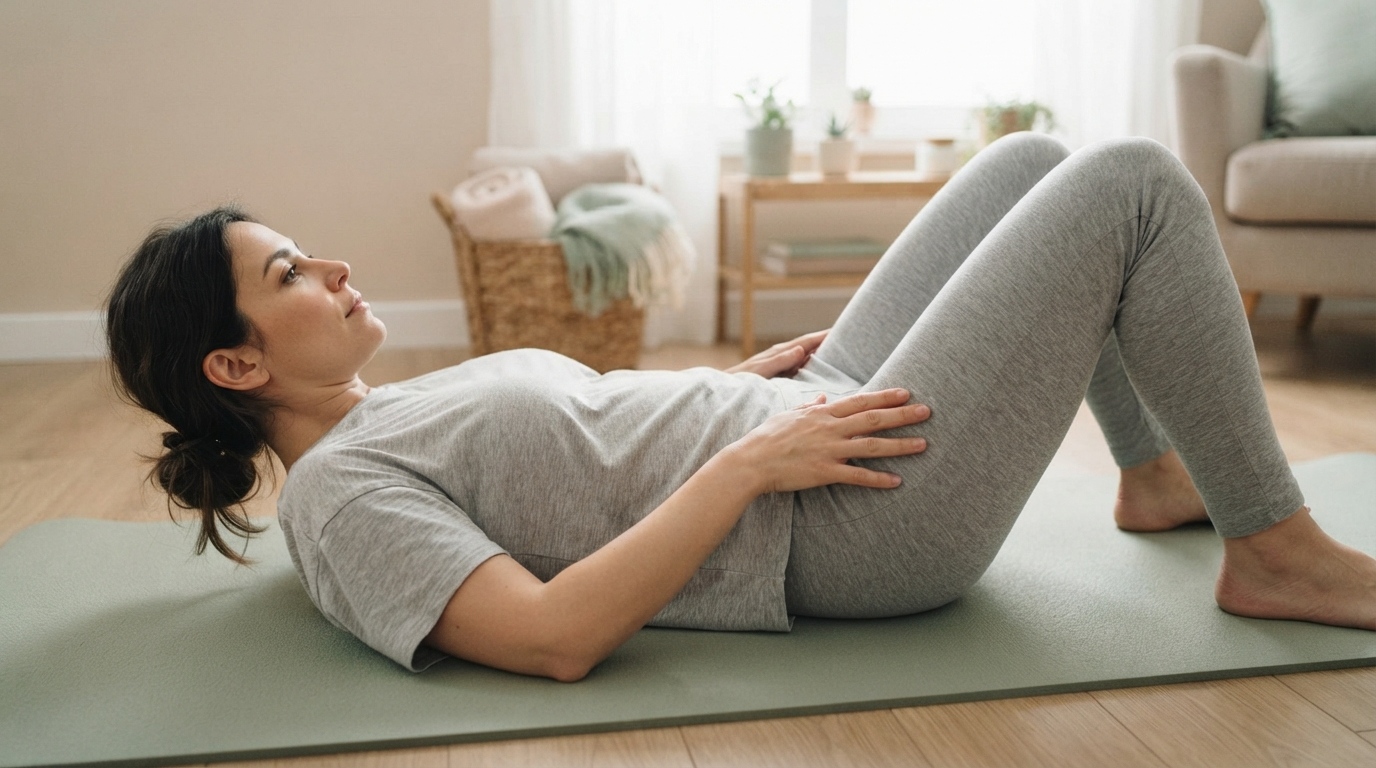
Pelvic exercises for a prolapsed bladder are often one of the first things a doctor or pelvic floor physical therapist recommends, but doing them well matters more than doing them often. A prolapsed bladder, also called a cystocele, happens when the pelvic floor muscles weaken enough that the bladder shifts down and presses into the front wall of the vagina. The right exercises can support those muscles. The wrong technique, or the wrong exercise for your specific prolapse, can leave you no better off.
This article covers what pelvic exercises for a prolapsed bladder usually involve, how Kegel pelvic exercise weights fit into that picture, which movements may need caution, and when it’s worth seeing a specialist instead of guessing on your own.
What Is a Prolapsed Bladder?
A prolapsed bladder occurs when the muscles and connective tissue that normally hold the bladder in place lose some of their support, letting the bladder drop toward or into the vaginal canal. It’s one of several types of pelvic organ prolapse, and it ranges from mild, where you might not notice much, to more advanced, where there’s a visible or palpable bulge.
Common causes include pregnancy and vaginal childbirth, menopause, chronic coughing, long-term constipation, heavy lifting, and simply the effects of aging on connective tissue. Symptoms vary a lot. Some people feel pressure or heaviness in the pelvis. Others notice a bulge, urinary leakage, or a sense that the bladder isn’t emptying. The severity of these symptoms often (though not always) lines up with how advanced the prolapse is.
Can Pelvic Exercises Help a Prolapsed Bladder?
Pelvic floor exercises can help many people with mild to moderate bladder prolapse by strengthening the muscles that support the pelvic organs, though they don’t reverse a prolapse the way surgery can.
Think of it less as “fixing” the prolapse and more as giving the remaining muscle tissue more capacity to do its job. For mild cases, consistent pelvic floor training is sometimes enough to reduce symptoms meaningfully. For more advanced prolapse, exercise is usually one part of a bigger plan that might also include a pessary (a supportive device) or surgery, depending on severity and how much the symptoms affect daily life.
Pelvic Exercises for a Prolapsed Bladder: What to Do
Kegel exercises (the foundation)
Kegels are the standard starting point. They involve contracting the pelvic floor muscles, the same muscles you’d use to stop the flow of urine midstream, though that’s just a way to identify them, not something to practice regularly.
A typical approach is a slow, controlled squeeze held for a few seconds, followed by a full release, repeated for several sets throughout the day. The release matters as much as the squeeze. Muscles that are constantly tense don’t necessarily get stronger, and in some people, that tension can actually contribute to pelvic floor dysfunction rather than solve it.
Getting the technique right is harder than it sounds. A lot of people end up bearing down or engaging their abdominal and glute muscles instead of isolating the pelvic floor, which is part of why a pelvic floor physical therapist is often worth seeing at least once, even if you plan to do the exercises at home afterward.
Using Kegel pelvic exercise weights
Kegel pelvic exercise weights, sometimes called vaginal weights or weighted cones, are inserted and held in place using pelvic floor contraction, which adds resistance to the exercise in a way that bodyweight contractions alone don’t provide.
For some people with mild prolapse and reasonably functional pelvic floor muscles, adding weight can help build strength faster than contractions alone. But this isn’t a universal upgrade. If the muscles are already very weak, if the prolapse is more advanced, or if there’s significant pelvic pain or muscle tightness rather than weakness, adding resistance too early can aggravate symptoms instead of improving them.
When weights might not be appropriate
Kegel weights generally aren’t the right starting point for more advanced prolapse, active pelvic pain, or a pelvic floor that’s tight rather than weak. This is a case where getting assessed first genuinely changes the recommendation; a pelvic floor specialist can tell you whether your muscles need more strength, better coordination, or less tension, and those three things call for different exercises entirely.
Core and breathing coordination
The pelvic floor doesn’t work in isolation. It coordinates with the diaphragm and deep abdominal muscles during normal breathing, and poor coordination between these can undermine pelvic floor training even when the Kegels themselves are done correctly.
A simple way to practice this is to coordinate pelvic floor contraction with exhale, gently engaging the pelvic floor as you breathe out, then letting it fully release as you breathe in. This connects pelvic floor work to something your body already does constantly, rather than treating it as a separate, isolated exercise.
Posture and lifting technique
How you carry your body throughout the day affects pelvic floor pressure more than most people realize. Standing with a tucked pelvis, holding your breath while lifting, or bearing down during bowel movements all increase downward pressure on pelvic organs. Learning to brace properly during lifting and avoiding breath-holding during effort reduces some of the daily strain that can work against pelvic floor exercises.
Exercises to Avoid or Approach With Caution
Certain types of exercise tend to increase pressure on the pelvic floor and may need to be modified, especially with symptomatic prolapse:
- Heavy lifting, particularly with poor breathing technique or breath-holding
- High-impact activity like running or jumping, which some people with prolapse tolerate poorly
- Traditional sit-ups and crunches, which increase abdominal pressure downward
- Straining during exercise or during bowel movements
- Exercises that cause a noticeable increase in pelvic pressure, bulging, or heaviness
None of these are permanent bans for everyone. Severity of prolapse, symptoms, and overall pelvic floor strength all factor into what’s appropriate. Someone with mild prolapse and strong pelvic floor muscles might tolerate light jogging just fine, while someone with more advanced prolapse might need to avoid it for now.
How Do You Know If Pelvic Exercises Are Working?
Improvement with pelvic floor exercises is usually gradual rather than immediate, often showing up over several weeks as less heaviness, fewer leakage episodes, or a reduced sense of bulging, not as a sudden, dramatic change.
If symptoms are staying the same or getting worse after a few weeks of consistent practice, that’s a sign to check your technique or to get an assessment rather than just doing more repetitions. More isn’t automatically better here. A specialist can also check whether you’re actually contracting the right muscles, since it’s common to think you’re doing Kegels correctly when you’re not.
When Should You See a Doctor or Pelvic Floor Specialist?
A few signs point toward getting a proper evaluation rather than continuing to manage things on your own:
- A visible bulge or something you can feel at the vaginal opening
- Increasing heaviness, pressure, or discomfort that isn’t improving
- Difficulty emptying your bladder completely
- Pain during exercise, intercourse, or daily activity
- Any bleeding that isn’t related to your normal cycle
- Symptoms that interfere with daily activities or exercise you want to keep doing
None of these automatically mean you need surgery. They mean someone who can actually examine the pelvic floor is better placed to guide your next steps than general exercise advice can be.
Related Injuries and Conditions
A prolapsed bladder is one part of a much bigger picture when it comes to injuries, joint pain, and the role exercise plays in recovery, and it’s worth seeing where it fits.
Shoulder injuries, for instance, follow an entirely different logic. PT exercises for a torn labrum depend on the specific tear and rehab stage, and frozen shoulder needs its own approach too, something covered in Exercises for capsulitis, which follows a different progression than a labral tear.
Lower back problems work the same way. If a disc issue at the L5-S1 level is part of your situation, the exercise approach changes completely L5-S1 exercises to avoid and explanations of which movements tend to aggravate that specific level of the spine.
Hip tightness is another area that gets lumped together more than it should. Psoas exercises can help with genuine tightness or weakness in that hip flexor muscle, but a tight-feeling psoas isn’t automatically the cause of pelvic or lower-back discomfort. Trauma release exercises, often shortened to TRE, are a separate practice entirely, movements meant to trigger a natural trembling response in the body, unrelated to pelvic floor strength or prolapse.
Nerve-related symptoms show up elsewhere in the body too. Ulnar nerve entrapment exercises address a nerve issue at the elbow that causes tingling in the fingers, a completely different nerve and cause from anything related to the pelvic floor. Posture concerns are their own category as well; neck hump exercises and the chin tuck exercise address upper-back and neck positioning, not pelvic support.
The lower leg has its own set of separate issues too. PT exercises for drop foot and stretch exercises for shin splints both deal with that area, but for very different reasons: one is often nerve-related, the other from repetitive impact. Hip impingement exercises focus on how the hip joint itself moves, which is a different assessment than pelvic floor strength. And trigger thumb exercises address a hand condition that has nothing to do with the pelvic floor at all but belongs to the same broader category of injuries where the right exercise depends entirely on the specific diagnosis.
If you want the bigger picture of how exercise selection changes across different injuries and joints, Exercises for Common Injuries and Joint Pain lays out that general framework.
Frequently Asked Questions
What are the best pelvic exercises for a prolapsed bladder?
Kegel exercises done with correct technique are usually the starting point, sometimes progressing to Kegel pelvic exercise weights once the muscles are strong enough. The right approach depends on the severity of the prolapse and how your symptoms respond.
Can pelvic exercises fix a prolapsed bladder?
Exercises can reduce symptoms and support the remaining muscle tissue, especially with mild to moderate prolapse, but they don’t reverse the structural change the way surgery can.
Are Kegel weights safe to use with a prolapsed bladder?
For some people with mild prolapse and reasonably strong pelvic floor muscles, yes. For more advanced prolapse or pelvic pain, weights may not be appropriate until a specialist has assessed your pelvic floor.
How long does it take for pelvic exercises to help a prolapsed bladder?
Most people notice gradual improvement over several weeks of consistent practice, not an immediate change. If nothing improves after a few weeks, it’s worth checking your technique with a professional.
Can exercise make a prolapsed bladder worse?
Yes, particularly high-impact activity, heavy lifting with poor technique, or any exercise that increases pelvic pressure and bulging. The right restrictions depend on the severity of your prolapse.
Is walking okay with a prolapsed bladder?
Walking is generally well tolerated and doesn’t typically need to be avoided, though if it increases heaviness or bulging, it’s worth mentioning to a specialist.
When should I see a doctor about a prolapsed bladder?
See a doctor if you notice a visible bulge, increasing pressure, difficulty emptying your bladder, or any pain during exercise or daily activity. Earlier assessment generally means more treatment options.
Conclusion
Pelvic exercises for a prolapsed bladder can genuinely help, but technique and the right starting point matter more than effort alone. What works for mild prolapse isn’t always appropriate for more advanced cases, and a few sessions with a pelvic floor specialist can save months of guessing whether you’re doing the exercises correctly. If your symptoms are getting worse instead of better, that’s worth an actual assessment rather than more repetitions on your own.